Tuesday, March 15, 2022

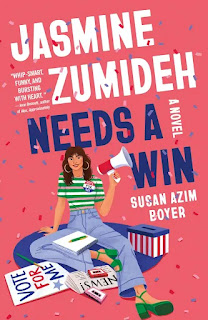
Interview with Susan Azim Boyer, Author of JASMINE ZUMIDEH NEEDS A WIN


In January of 1979, my American mother sat on an airfield with her friends and family gathered in groups of twenty. In bombs fell, they were told, no more than twenty of them would be killed at a time. With the Shah (king of Iran) ousted from power, Americans were no longer welcome in Iran. Meanwhile in America, many Iranians found they were no longer welcome in the country, especially when the ensuing hostage crisis at the American embassy captured American attention in a way the actual revolution had not. I grew up on my mother's stories of Iran, the chaos that was revolution and evacuation, yes, but also her love for the Iran. For that reason, fiction dealing with the Iranian revolution has always had a dear place in my heart.

Needless to say, I'm stoked about debut author Susan Azim Boyer's forthcoming YA novel Jasmine Zumideh Nees a Win (November 2022), starring an Iranian-American teenager who finds herself experiencing anti-Iranian sentiment at school in the middle of her campaign for student body office.  
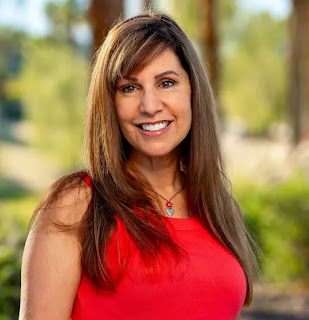
Susan Azim Boyer


Erica: Though it was an important world history event, American awareness of late-seventies Iran emphasizes the hostage taking more than the revolution that led to the hostage taking in the first place. Do you ever encounter a lack of knowledge about this moment in history while describing your book to people?


Susan: Yes! This is one of the primary reasons I wrote the book: to contextualize the Iran Hostage Crisis for readers who may conflate the undemocratically elected government of Iran with Iranian people, as the media often does. And to understand that our two countries have a long, complicated relationship that dates back to the 1860s, when we forged a Friendship Treaty with Iran, through the 1950s, when the CIA thwarted an Iranian reform candidate of the people and instead re-installed an autocratic Shah (king), who was eventually overthrown during the revolution.


Erica: Follow-up question: How do you think this book may serve as an introduction for young readers who are unfamiliar with the Iranian Revolution era?


Susan: When a country like Iran has been subjected to constant negative media attention, it strips its people of their humanity. I hope my book can make Iranian Americans human, funny, and relatable to readers.


Erica: What are some favorite cultural details you were able to include in this book? You’ve mentioned on goodreads that it was fun to include some yummy foods.


Suan: Persian food, for sure! Jasmine’s Amme Minah is constantly cooking. I’ve also included pre-revolutionary Iranian history, an explanation of Persian New Year, and lots of Farsi.


Erica: Historical fiction set in recent decades rides a line between historical and contemporary. The teenagers of Jasmine’s era are in their fifties now. Teen readers have lives made different by things like technology, pop culture, and fashion. What kinds of “historical” details did you find yourself including to set the scene for a narrative in a time that’s still in living memory?


Susan: In addition to all the references to political events (Watergate, the Hostage Crisis), the book is peppered with musical references, pop culture, and the fashion of the era.


Erica: As you shared Jasmine’s story with pre-publication readers (critique partners, editors, arc readers, etc.) have you encountered any misconceptions or confusions that some readers may have about Jasmine's culture or her experience growing up as Iranian American?


Susan: The same as everyone else’s – a lack of context about events preceding the hostage crisis!


Erica: Some books with Iranian characters will explain cultural elements that may be unfamiliar to non-Iranian readers while others lean towards full immersion and leave readers to learn as they go along. For example, I recently read Firoozeh Dumas’s "It Ain’t So Awful, Falafel" and there’s a scene where the Iranian main character tells an American friend that Iranian culture places importance on hospitality and her mother has been working hard to take care of visiting relatives. I’m also reading "My Part of Her" by Javad Djavahery, which contains a similar scene where a mother works hard to take care of visiting relatives, but Javad Djavahery lets a reader pick up on that chapter's theme of hospitality on their own. To what extent did you lean towards immersion or explanation in writing Jasmine Zumideh Needs a Win?


Susan: Jasmine is learning about Iranian culture from her auntie along with the reader, so there is probably a bit more explanation.  


Erica: What are some things you love about this book that you are excited for readers to experience when it releases this November?


Susan: I’m excited for them to connect with Jasmine. I hope they think it’s funny and, once disarmed by the humor, develop a fuller understanding of Iran and a deeper appreciation for its people.


Monday, March 22, 2021

Adult Voices on Adult Content in YA Books


 When I was sixteen, I read a dystopian book with a sexual assault scene. The teen girl protagonist was in a prison-type environment where she had to trade sexual favors for prison perks. After a “mild” assault scene, the guard character told her he’d be back for more later.That bothered me enough that I returned the book to the library. I didn’t want to read a book with repeated assault scenes. 

Conversations about what teenagers should be reading-and by should, I mean should, not shouldn’t-always seems to center around what adults want teenagers to learn. Adult women want young girls to be educated about sexual assault, so they write and promote those books. The summer before my senior year of high school (2014), I recall a sudden explosion of dialogue about sexual assault in all my online spaces. All the book review and writing websites I followed wanted to talk about the importance of understanding assault. Sometimes that centered on books with rape and assault scenes, but more often, it was a general dialogue.

Did I learn about sexual assault, rape, and consent as a teenager? Yes, from reading blog posts, tweets, and formal articles, most of them authored by women in the writing/general geekery community. Not from reading novels. Books didn’t need to “teach” me about sexual assault because I lived in a broader world where those dialogues were already happening. I read some YA contemporary books, issue books, with assault scenes and didn’t mind them, since that’s a hallmark of the issue book subgenre. But I didn’t want that kind of content in my dystopian fiction. It seemed gratuitous. 

My senior year of high school, in response to all the online dialogue about sexual assault, I wrote a rape book. I published a one-page excerpt from it in my high school’s literary magazine, but I have no plans to publish the rest of the story. Its purpose was for me to learn and grow as a writer and explore topics that were dominating my internet landscape. Every edgy scene was, I believed, essential rather than gratuitous because the point of an issue book is to showcase difficult content.  

When I was 22, I wrote a fantasy book with an assault scene. Two male critique partners gave me the feedback that that scene seemed contrived, that it didn’t fit within the overall context of the story. I ignored them because, y’know, men were the patriarchy. When I was 24, I looked back over that scene and realized they were right. In my previous book, several sexual scenes were necessary, but in this book, even one was too much. I wrote that scene as An Agenda Moment, to make a point about how Sexual Assault Is Bad. But most people know sexual assault is bad already and reading that scene is unlikely to be anybody’s personal revolution. I could articulate why I put that scene in there-”This helps explain a theme”-but I didn’t have a good explanation for why that character was committing assault. And I know sixteen year old me wouldn’t have liked it, so why am I giving that scene to other sixteen year olds?

As an adult, I’m less bothered by books with sexual assault scenes. I read one just this weekend, and the affected character was a teenager, though the book was meant for adults. There’s plenty of space for adult authors and adult readers to read and write scenes like that, but they can do it away from teenagers. Adult voices have always dominated the YA landscape and dialogues about what’s right for YA tend to center adult interests rather than that of young people. When adults talk about why gritty content is okay in YA fiction, the two main talking points are:

  1. This type of content is realistic to teen life

  2. It is important for teenagers to learn about difficult issues

The first is valid. There are, of course, teenagers who seek out books about gritty issues, either because they see their own lives represented in darker fiction or because they want to learn about gritty topics. But I’m uncomfortable with adult authors trying to make their books teaching tools rather than avenues of entertainment. The question at the heart of the debate surrounding content in teen books shouldn’t be “Is this an important issue?” but “What benefit will teenagers derive from seeing this important issue explored in novel form, as opposed to reading about this topic in an informational article?” Do you, as an adult author, have a legitimate story reason for including this content, or are you just getting on a soapbox? Teenagers who read tend to read a wide variety of material, not just novels, and will learn about dark issues through their own study, without seeing characters they love placed in harm’s way to prove a point. 


Friday, March 12, 2021

Interview with Jenna Evans Welch on Love & Olives

The island of Santorini, where the story takes place


Olive Varanakis loved her dad-until he ditched her and her mom and ran off to Greece in search of a city that doesn't exist. Now in high school, she's reinvented herself as Liv, and disavowed all connection to her dad. Except when she nurses her ever-lingering fascination with the city of Atlantis. When her father reenters her life and calls her to the sunny Grecian island of Santorini, Olive reluctantly takes the chance to hunt for the city-and father-she gave up on long ago. 

Here's author Jenna Evans Welch on the characters and world of Love and Olives. 


 1. The main character of Love and Olives is a girl named Olive whose love interest delights in telling her unnecessary olive fun facts. What led you to pick this name? Are you an olive lover?

I do love olives, but I think I originally chose the name just because I thought it was cute. As I researched for the book, I realized that olives have very interesting historical and cultural significance and I loved the layers that brought to her name's significance. Plus, Theo pelting her with all those annoying facts was fun!


2. What are some of your favorite pieces of your trip to Greece that made it into the story? Which came first, trip or story ideas?

The setting always comes first for me, I found the real Atlantis Books on a google search and went there looking for a story. It took me a couple of tries, but when I found it I ended up writing it rather quickly. 

Atlantis Books, the real-life bookstore with a secret bunkroom where Liv stays during her time in Greece.


3. Any fun trip moments that didn't make it into the book?

Cliff jumping in Amoudi Bay! My last day in Santorini I went down to the beach where Liv/Olive spends some of her time and had an incredible morning swimming around and jumping off a huge rock just off of the coast.  


4. You've mentioned online before that your next Love Abroad book will be set in Iceland. Can you tell us anything about that one? 

This was an idea I was playing with but I have actually pivoted to another idea! It is a contemporary YA, but I haven't disclosed the setting yet. I will say I am FASCINATED by the town where it takes place .
Awesome! I love how rich your settings always are and how deeply they inform the story. 

5. What captured your interest in Atlantis and why did you choose to include it in the story? Thank you so much Jenna!

I am not a person who is terribly interested by fantasy or sci-fi, so I was shocked when Atlantis swallowed me whole! The island of Santorini is full of references to Atlantis, and as I began to research the lost city I was amazed by how long this story has been around and how many people have dedicated their lives to finding it. It felt like the perfect metaphor for things we have lost and gave me such a great character--I'm always rooting for the person who is out there trying, and I loved the idea of Liv's father being so flawed yet so loveable. 


6. Olive keeps a list of objects her father left behind when he moved to Greece, ranging from a pack of gum to a map to the lost city of Atlantis. Each chapter in Love and Olives starts out with a description of one of these items and gives us insight to her relationship with her absentee father. These were some of my favorite parts of the book because they're really good short fiction in their own right, give us more insight to her dad's backstory, and having a paragraph or two at the beginning of a chapter put me in "I can read a little more, it's not like I'm starting a new chapter" mode (and then I'd read the rest of the chapter anyway). What was your writing process like for these chapter starters? How did you pick the items?

Aww, I love that insight into your reading experience! The list was one of the first ideas that came to me for this story, and I was really captivated by the idea of ordinary objects having so much meaning when they belong to people we love. I spent time thinking about the father figure and what someone like him would own (and leave behind) and the items were fairly easy to pinpoint. 


Love and Olives is a companion novel to Love and Luck (set in Ireland) and Love and Gelato (set in Italy). Gelato and Luck share some characters and are best read Gelato first, Luck second. Olives is a sister in spirit to the other two books but can absolutely be read as a standalone. 

Images courtesy of Jenna Evans Welch


Saturday, March 6, 2021

Do Books Actually Teach Life Lessons?

When I was 21, I went to see a production of Les Miserables. That story is all about poor people, and specifically, poor French people. When I walked out of the theater, I saw a woman begging for change on the sidewalk. I thought, "Hey, I just watched a show about helping poor people, I can spare a little change." I sat and talked to her for about ten minutes after and learned that she was French. Hundreds of people flowing past us on the sidewalk had given a lot of money to buy tickets to watch Jean Valjean help poor French people, but no one else was helping the actually French woman outside.

Charles Dickens's classic A Christmas Carol ends with the miserly Scrooge buying an enormous Christmas turkey for Tiny Tim and his family. There are two calls to action you can pick from that:

1. Give money to the poor on Christmas

2. Buy a turkey

Scrooge's choice to pay for a turkey is a significant one. Before A Christmas Carol, families celebrated the holiday with a Christmas goose. The year after the book was published, goose sales took a hit because everyone wanted turkeys instead. Two centuries later, turkeys are the bird of choice for the Christmas season. It's impossible to make it through the Christmas season without running into Barbie's Christmas Carol, Mickey Mouse's Christmas Carol, The Smurfs' Christmas Carol, etc. And yet, not everyone gives to the poor on Christmas. There certainly is a wide and lucrative tradition of Christmas philanthropy, but not everyone who consumes A Christmas Carol adaptations joins in. It is enough to feel Christmasy by watching a movie or by eating a turkey. Audiences feel no pressure to make Christmas happen for someone else. 

I'm always skeptical when I hear it said that consuming media about people of another culture or people from disadvantaged backgrounds can make audiences more empathetic. I can think of times a book had a direct result of inspiring me to do something in my own life, like taking gymnastics lessons after I read a book about a gymnast. But I think for the most part, books produce feelings rather than actions.

Where book do have power is in introducing ideas. In fifth grade, my teacher read the class Or Give Me Death by Ann Rinaldi, a historical fiction novel narrated first by Patsy Henry, oldest daughter of Patrick Henry, and later by Patsy's little sister, Anne. In Patsy's section, Anne is shown to be a brat. In Anne's section,  Patsy is tyrannical. I couldn't reconcile the two sisters' images of each other. It showed me, for the first time, that it was possible for more than one person to be right.  

And, of course, books have the power to introduce knowledge. If you know nothing about Nepal, a book about Nepal can give you a basic working knowledge of the culture. If you know nothing about the fifteenth century, you can learn about the fifteenth century.  

My freshman year of college, my roommate and I took a class where we were given a reading on slavery. I watched her look up from her textbook and say to the whole apartment, "I'm reading about how awful slavery was and I keep wondering, would've I have done something to help if I'd been alive then? Would I have been a conductor on the underground railroad?"

"Did you vote in this last election?" I asked.

"No. I'm not registered to vote. And there aren't any important issues anymore." 

People have this idea that they'd be crusaders if they lived in different times, different places, different worlds. But most people are too busy living their lives to do anything.

While one single book probably won't make an impact, it's possible for dozens of books on the same theme to drive a point home. If you read a story about forgiveness, will you go out and forgive those who've wronged you? Probably not. But read twenty forgiveness plots in the span of a few years and forgiveness starts to feel like an inevitability. I largely credit movies and books for deromanticizing communication. There's something thrilling, supposedly, about two people looking at each other and silently deciding the other person wants to be kissed. They never guess wrong in this, somehow. Sometimes this happens in the middle of a fight or other heated moment. Obviously there are a lot of ways for that to go wrong if you try that out in real life.

If there were more stories about people asking, "Can I give you a kiss?" dating couples might prioritize communication. In extreme circumstances, that might prevent situations where one person feels they were assaulted while the other thinks they were making a wanted romantic move. All around, it would save everybody involved from the awkwardness. But because fictional lovers practice pseudo-telepathy, people have picked up that silent romance is a social norm. 

While some rare books change minds and hearts, producing broad and sweeping social impact, I'm skeptical of most books' ability to change the mind of even one person for as much of an afternoon. People largely don't seek out books pushing agendas they disagree with, so if a person lives the values of a book after reading it, that's more indicate of values they held before reading it than something new that grew out of the reading experience. Overall, readers are good at feeling the message of a book rather than living it outside the pages.

Sunday, January 31, 2021

Why Presentism Fails Your Readers

In sixth grade, I got a language arts worksheet about Jackie Robinson that had a sentence like "When Jackie traveled with his teammates, he had to stay in hotels that were just for African Americans." I might've only been twelve, but I could tell that line had been sanitized and felt irritated that we were being coddled by adults that way. Sure, I wouldn't have liked "Jackie stayed in hotels that were just for colored people" (or some worse term) but the writer could've gone middle ground and said, "Hotels were segregated, so when Jackie traveled for away-games, he had to stay separately than the rest of his team." 

That worksheet wasn't my first reading on segregation. It wasn't my first introduction to Jackie Robinson. But it was my first example of what I would later learn was called presentism-the fallacy of presenting the past through the lens of the present. For example, in 1909, the NAACP was formed under the name National Association for the Advancement of Colored People, so clearly its founders were okay with the name colored. A historian practicing presentism would look at a document describing the NAACP's founding and call all of its initial members racist because "colored" is a taboo term today. Except they wouldn't, because historians aren't stupid. 

Last year, I read a historical fantasy novel set in the Wild West with both Native and LGBT characters. Every white character who has a one-page interaction with Native people instantly becomes racially tolerant. A character who learns one of his friends is lesbian instantly trots out the twenty-first century aphorism "love is love." A character who is part of a stigmatized magical group hides her magical status from her friends, but as soon as she "comes out," literally no one cares. You walk away from the story with the idea the historical prejudices simply never existed. As a reader, I didn't walk away from the story with a newly enriched sense of justice and tolerance, which might have been the authorial intent. You cannot teach justice by crafting a narrative without injustice. 

Obviously some presentism is necessary to make a story palatable to modern readers. The same year I read the Jackie Robinson worksheet, I read a WWII novel where soldiers used racial slurs against Japanese people. I thought I'd read an unflinching portrayal of  wartime racism, but the author's note stated that the writer had toned down the historical racism as much as possible. Stripping historical prejudices out of a story entirely does a great disservice to the people your story portrays. 

One of my favorite elements of Mary Robinette Kowal's Glamuorist Histories books is that her characters don't, for the most part, have the sensibilities of modern people. In the fifth book, Jane, a white character, visits Antigua and meets slaves for the first time. Jane ponders her stance on slavery for a few seconds and remembers that she once signed an abolitionist petition and still owns a keepsake book with an abolitionist stamp in it. But then she reminds herself, "That's just how things are done here," and moves on.

That little moment moved me. I saw it as a parallel to modern people who sign online petitions and collect "stamps" in the form of retweets and profile frames, but when actually faced with a problem, can't be bothered to do anything. Jane, of course, changes her sensibilities over the course of the novel, befriending several slaves and helping free them. Jane's opinion pivot and actual action can be read as a call to arms for readers to match their clicktivism with real activism. 

The problem with presentism in narrative isn't that it's unrealistic, but that it leaves readers uneducated of the realities of the time and there is no call to action. Why would a reader be inspired to fight injustices in modern times if they never existed in the past? As characters become aware of their own biases, readers can become aware of theirs. 

In Prisoner of Time by Caroline B. Cooney, protagonist Devonny and her best friend, Flossie, are both wealthy Anglo-Saxon ladies expected to marry men of similar social status. The book opens with Devonny smuggling a love letter for Flossie from a poor Italian immigrant gardener named Johnny. While reading the letter, Flossie learns for the first time that his her boyfriend's name is actually Gianni. She squees to Devonny about how romantic the "spelling" is, but a modern reader should be able to figure out Gianni is, not, in fact, an alternate spelling of the American Johnny. It's a normal Italian name. A wealthy 1890's lady and an immigrant gardener  face many obstacles to marriage, but that external problem is less interesting to me than the internal one: Flossie's clueless romanticization of her boyfriend's exoticness. Flossie's only an introductory character and the story soon veers off to follow Devonny's time travel romance with a boy from the future, but I find myself wondering how her relationship with Gianni would play out long term. If she doesn't even know his name, are they really ready to get married? What other crucial background knowledge is Flossie missing about Italy and how is Gianni going to deal with that? 

Modern people can marry whoever they want, so they have little to gain by watching the wokest lover of the nineteenth century triumph over the tyranny of racist parents stopping their progressive-minded daughter from gallivanting off into the sunset with her one true love. But language barriers and differing social norms are still a very large part of cross-cultural dating. I once had a relationship that ended because my Congolese boyfriend was not a native English speaker and I didn't speak any of the other four language he knew. My parents have nothing against Congolese people. His family have nothing against Americans. But our relationship was peppered with "Gianni" moments. Watching historic characters learn more about a love interest's culture, rather than intuitively knowing about it already or having all the conflict stemming from outside characters' prejudices, gives modern readers a playbook for their own cross-cultural relationships. 

There are many problems with presentism. It infantalizes readers and modern people can see right through it. But it's also a way of grasping low-hanging fruit and missing out on richer, more meaningful stories. Ultimately, history's messiness of colonialism, of war, of racism, of discrimination, of immigration, naturally leads to rich and compelling stories if you don't make artificial efforts to simplify the narrative. Give me a clueless Flossie or a "that's how things are done here" Jane over historic characters with modern sensibilities any day. 

Sunday, January 10, 2021

Interview with Lani Forbes, author of The Seventh Sun and The Jade Bones


I'm not exaggerating when I say The Seventh Sun is my favorite fantasy novel from the past few years. I read some Mesoamerican time travel in elementary school, which first introduced me to the world of obsidian swords and calendars that end in apocalypse. But I'd never seen a fantasy book set in that kind of world, and man, did this deliver.

Every morning in the Chicome empire, the emperor must shed his blood to make the sun come up. This sun is the seventh one to hang in the sky, each one born when a god sacrifices themselves to stave off apocalypse. To repay the gods, animals are slaughtered at feasts and special ceremonies. 

And sometimes people. Prince Ahkin loses two parents in the space of one night when his otherwise healthy father suspiciously passes away in the night. Hot on his heels, his mother plunges a dagger into her chest to join her husband in the underworld. Now it falls to Ahkin to raise the sun every morning and pick a wife to rule at his side.

Mayana hasn't been able to stomach sacrifices ever since her father killed her pet dog to please the gods. She knows she is a descendant of the water goddess and pricking her hand calls forth a very real power to command the waters. But do the blood offerings of animals and ordinary people really placate the gods, or are they the desperate acts of apocalypse-minded people to feel some sense of control over their lives? Mayana has learned to keep her doubts quiet to avoid being branded as a heretic, and that's never more important than when she's summoned to the Chicome capital as bridal candidate. Six girls from divine bloodlines compete for Prince Ahkin's hand. One will be crowned empress. The other five will be sacrificed to bless the marriage. 

Time is running out in more ways than one. Ahkin only has a few days to pick a wife before the unlucky period at the end of the calendar cycle. A few days to condemn five girls to death and marry a stranger, a stranger who will eventually meet the same fate as his own mother. And ever since Ahkin took the throne, the sun isn't staying in the sky as long as it used to. 

From the beginning, the premise is naturally set up for a twist ending. On the surface level, the stakes are "Will Bachelorette #6 die or get married?" but the deeper ones are, "Do they find a way to sabotage the contest or does apocalypse come first?" So there were really four possible endings on the table and I felt a very real suspense. Though the premise is dark and their entire culture runs on sacrifice, I actually enjoyed this book on a very spiritual level and it felt like a light in dark times. I've watched a lot of people settle into apocalyptic moods as a result of covid culture and recent social upheaval, so the motif of humans practicing ritualistic behaviors to tell themselves they had the end of the world under control really hit home. Ultimately, it comes to a beautiful, hopeful conclusion.

I adored the lush Mesoamerican worldbuilding. The Mayan-inspired names, the incorporation of myths, the tropical flora and fauna, the warfare, the food-it all just sings of research. Ahkin and Mayana's magic also gave me an Avatar the Last Airbender vibe.They remind me of fire and water bender respectively. There's a cute moment in Mayana and Ahkin's initial meeting where she points out that water and light together make rainbows. In addition to raising the sun, Ahkin's magic lets him bend light, so he can turn himself invisible in battle when he needs to. I was so excited to read this book that I refunded another book's audible credit to get it. Now I'm pumped for the release of the sequel next month (February 2021), which is set to incorporate what I think it one of the coolest figures of Mayan mythology: the return of the god Quetzalcoatl. 

And now, for an interview with author Lani Forbes:

1. Where did you get the initial idea to write a Mesoamerican fantasy? Once you had that initial spark, how did you flesh out the idea to build the story?

My stepfather had lived in Mexico before my parents got married and he and my mother decided to move back to start a drug treatment center after my sisters and I all graduated. They live there now and my sisters and I try to go down and visit them as often as we are able. When I was growing up, he shared so many stories of his time living there and I always held a fascination for ancient civilizations, so Mesoamerican history was of particular interest to me. I read about the creation myth of the Five Suns and the idea for the story began to take shape from there, specifically from the idea of the world being destroyed and recreated multiple times. 


2. How did human sacrifice catch your interest?

I think what captured my interest is the fact that it’s often so misunderstood and misrepresented. When studied in context, any kind of blood sacrifice was extremely important and significant to ancient Mesoamerican thought. They believed strongly in the idea of giving in order to receive, and as the gods blessed them with gifts of life and sustenance, they owed the gods in return. Blood contained the power of life and fertilization, and one of the many creation myths believed that the gods sacrificed their own blood to give humanity life. So in their view, they were repaying a debt. Human sacrifice itself is often misrepresented as well. Most ritualistic killings were captured soldiers of enemies and no different from our own cultures killing enemies on the battlefield. The main difference was just when the killing happened. In fact, the purpose of many battles was to capture, not kill, the enemy, making their battles likely less bloody than warfare in Western cultures. You will notice that other than the selection ritual in the story, the only other instance of human ritual killing in the book is with captured enemy soldiers after a battle. 


3. What are some of your favorite research tidbits you picked up  that you incorporated into your story?

A fun random bit of research I found fascinating was in some of the beauty rituals and routines that women used. For example, in The Seventh Sun, when Mayana is being prepped for her journey to Tollan, many of the beauty products and rituals are from my historical research (including the face cream with pigeon droppings!). 


4. Without spoiling anything, there's a twist at the end of Seventh Sun. Was the ending in the initial outline, or did it evolve as you kept drafting and revising?

The major twist at the end was always part of the story from the very beginning. In fact, it was one of my first ideas that got me excited to write the rest of the story! In the earliest drafts, the events of book two were actually shortened and included at the end of book one. As I got closer to the end of book one, I decided to save the events of book two for their own book. 


5. Were there any specific myths or folktales that influenced Seventh Sun or Jade Bones?

The main myth that influenced The Seventh Sun was the Mexica creation myth of the five suns. The Jades Bones and its portrayal of the underworld is influenced by the Popol Vuh texts of the ancient Maya populations in Guatemala and Belize. 


6. Without giving too much away, what can readers look forward to in your second book, releasing next month?

Mayana and Ahkin got significantly caught up in the drama of the selection ritual, but now that it’s over, they have to deal with the fact that they don’t really know much about each other. I had a lot of fun seeing how their dueling personalities came out in the hardships they face in book two and how they really deepen and mature their relationship through their various trials. The other exciting part of book two is that I introduce a new POV, which is Yemania, Mayana’s close friend. Yemania gets her own exiting storyline and love interest in book two that I enjoyed writing just as much if not more than Mayana’s! I love that Yemania really learns a beautiful lesson of self-acceptance through her story! 


7. How many books can readers expect to see in the series?

The Age of the Seventh Sun series is a trilogy, so there will be three books total! 

Thank you for joining us! Jade Bones releases on February 16, 2021. Seventh Sun and its sequel are also both available for download on Audible. I plan on reading it before studying abroad in the Yucatan Peninsula this summer to learn more the ancient history and mythology of the region.

Thursday, December 3, 2020

Sheltered


Sheltered people make compelling characters. If a character is sheltered from an original world, like muggle-raised Harry, readers get to see the world through someone who's just as new to it as they are. When a character is sheltered from our own world, ordinary things become exotic, wondrous, and scary.

I'm currently reading Palace of Lies, a brilliant novel about a sheltered character by Margaret Peterson Haddix. Princess Desmia is fourteen years old and she’s never seen the sky. Her entire life has been spent trapped inside a palace filled with scheming courtiers. This teaches her fear. Towards the beginning of the novel, her palace is burned down by unknown saboteurs and she’s forced to flee the city. Her first glimpse of the raw blue sky, unhemmed by  buildings, sends her into hysterics and she screams uncontrollably. Her traveling companions resort to carrying her on a stretcher with a sheet over her head to keep her quiet. 


At the start, Desmia’s only characteristics are her shelteredness and paranoia, though of course she grows as the story progresses. You’d think that would make her hard to like, but it doesn’t, because she featured as a non-POV character in Palace if Mirrors, a companion book to Palace of Lies. We already know this girl and now we get to see things from inside her head. I was impressed with the author for taking shelteredness to such a realistic extreme. Margaret Peterson Haddix has also written Claim to Fame, a book about a girl who hears gossip about herself in her head whenever she steps out of her house, and the Shadow Children Sequence, a series about kids who are raised in hiding because they were born illegally under population control laws. This is my favorite of her takes on sheltered kids.


Showing shelteredness in characterization is hard to pull of, but you should at least acknowledge it in dialogue. I’ve read a few books where young girls were raised only by women-either Rapunzel style where they only know a mother, or Wonder Woman style where they grow up surrounded by other women. And yet when these girls first meet a man, they have no trouble using male pronouns. Sure, they might have heard he/him/his words in conversation with other women, but that doesn’t mean they’ll be able to use them flawlessly. You know what the word “whom” means but don’t get much practice using it. If you found yourself transported into a society where whom was common usage, you’d stumble through conversations and need to adjust to using it. 


I once read a Rapunzel-style isolation story where a teenage girl doesn’t know what sex is because she’s never met a man and her mother never needed to explain it to her. Yet she can use the word “whorehouse” in a sentence in a way that implies she has a vague notion of what a whorehouse is. Sex seems to be a favorite element authors like using when showing the effects of sheltering on a character, though I think it's less interesting than the linguistic side of things.


Being sheltered stunts your entire vocabulary. Sarah Miller’s nonfiction book The Miracle and Tragedy of the Dionne Quintuplets tells the story of five sisters who were raised in public isolation for nine years. The Canadian government seized them from their parents, built a nursery with one-way mirrors for tourists to gawk at them, and left them in the care of doctors and nurses until they were nine years old. Because their nursery operated on a strict schedule, they didn't need to ask for things. Everything was given to them at predictable times. They didn't get to meet new people and identical sisters raised together have a natural understanding of each other, so there wasn't much need to talk at all. At one point, they only knew about 75 words when average toddlers know a few hundred.


Basic social skills will be affected, too. Patricia Kindl's The Woman in the Wall gives us Anna, a girl who lives secretly in the walls of her family's huge house. When she steps out of the wall to talk to someone, her first spoken words in years are hoarse because she's forgotten that you need to inhale before speaking. 


Everybody lives sheltered to some extent, or at least lacking in knowledge. I knew a girl who had never used a vending machine at age nineteen. I didn't learn the word for tupperware until I was about twelve because I heard them called "plastic containers." Sheltering either leads to a lack of confidence, when people realize they're missing something, or a bumbling display of overconfidence when people want to disguise the fact they don't or they've never realized the lack in the first place. Again, sex seems to be a fascination for people writing sheltered characters. At my first bachelorette party, a girl who thought she'd learned a lot about sex and sexualities from the University of Tumblr made statements she thought helped her sound woke-"I wonder what asexual people do at bachelorette parties"-but she didn't know a basic female body term when I used it in a sentence. 


On the under-confidence side, I grew up with a mom who didn't let us play with face cards, so I still have trouble keeping track of what order the non-number cards go in and I get the clubs and clovers mixed up. In my teens, there were opportunities to play card games with friends, but I remember standing off to the side sipping sodas at one party because I didn't want to lose in front of everyone. My parents invited my brother and me to play cards with them this week and they learned that neither my brother or I could shuffle a deck.


Equally as important to your characterization is what they're sheltered with, not just what they're sheltered from. The Dionne sisters were raised with an iron-clad sister bond, Princess Desmia with political paranoia, woman-raised Rapunzels and Wonder Womans with a ubiquitous feminine presence. All those things will inform their perception of the outside world they grow to know. 

Tuesday, December 1, 2020

Raising the Stakes


No, not those stakes. 

John Green’s novel Paper Towns has the highest possible stakes for a high schooler: suicide of a friend. Q’s friend and crush, Margo, disappears without warning. He and his friends don’t voice their concerns about suicide much, but it’s always there in his head. They finally figure out Margo’s location the morning of their high school graduation. Her location is time-sensitive and they peace out of graduation, still in their caps and gowns, to find her before it’s too late.


The best case scenario here is that Margo is alive and willing to return and be Q’s girlfriend. The worst case scenario is that she’s dead. She has a little sister, who is just as much in the dark as the rest of them, who’d spend the rest of her life mourning a dead sister. I was so stressed about Margo that I skipped to the end to make sure she was alive before I read any further. When they find her alive but unwilling to return, it’s a happy ending, even though the guy doesn’t get the girl, because at least she doesn’t die.


The movie lowers the stakes catastrophically. No one ever discusses the possibility that Margo’s dead, so the worst case scenario is that she’s alive and has made a happy life for herself somewhere. The timing is shifted to well before graduation and shortly before prom. Q’s friends are annoyed with the hunt for Margo and want to turn back before she makes them late for the dance. When Q finally finds Margo, he asks her to at least keep in contact with her sister, to which she smirks, “We talk every day.”

The ending stays that same, but now it’s a downer because the stakes are “Does he get the girl?” instead of “Is the girl alive?”

Death is about as high as your stakes can go. I once read a query in an online writer's forum for a book about a girl whose best friend died in a hit and run accident. The query went on to talk about the girl's relationships and grieving and life in a small town. The author wanted to know how to make her query stronger, so I commented that she needed to put the actual plot there. What is our detective girl doing to track down her friend's killer?

She commented back and said her character did nothing at all. This wasn't a mystery, it was a YA contemporary book about working through grief.

Yes, in real life people do die mysteriously and their loved ones are left without answers. But that's not okay in fiction. Death as a stake is fine and there are plenty of grief novels. But unsolved death is a stake you can only have in mystery novels because it begs resolution. 


A successful example of lowered stakes is Black Panther, my favorite Marvel movie. Usually Marvel gives us a universe in danger, a galaxy in danger, an Earth in danger. Black Panther gives us a country in jeopardy. The stakes aren’t “Will the entire population be killed” but “Will these people lose their privacy and way of life?” The conflict feels so much more personal.

A small-scale stake imbedded in a large-scale stake can personalize the conflict, too. In one of the Alex Rider books, Alex, a teenage British spy, learns of a terrorist plan to bomb Washington D.C. Big deal, he’s British. What happens in America doesn’t affect him. Except his friend Jack is visiting Washington D.C. that week. Killing off a huge number of people (as well as obliterating the government of a hugely influential country) wouldn’t be great, but Jack’s what matters here.


I've read lots of YA contemporary retellings of myths or fairy tales about royalty set in modern high schools. Princes are demoted to quarterbacks. Marriage is demoted to dating. Betrothing yourself to Prince Charming is a big deal because you get to be queen one day with power, money, and influence, but all the quarterback can give you is popularity. No one at my school cared about popularity. There's your friends, the people you know, and then the people you don't know. 

The same goes for schoolifying stories about war. Any modernized story does this, really, even if the characters are adults and more permanent things like marriage and careers are at stake. 

Part of the charm of romantic comedies, stories for children, and Christmas media is the low stakes. The subtle risk "Will this small town have a merry Christmas?" is what makes it so heartwarming in the first place. Lowering stakes isn't a bad thing. Not when it brings the conflict closer to home and your character's heart. When calibrating what's at risk for your characters, make sure your lowered stakes intensify the conflict rather than bringing it down a notch. 

Monday, November 30, 2020

Thanksgiving Holiday Reads: The Mayflower Bride and Weetamoo


I recently made the goal to read one holiday book for each month of the year. For November, it was important to me that I read both a Native American colonial era book and a Pilgrim book. I'll tell you right off, it's a lot easier to find Native American historical fiction that it is anything having to do with pilgrims. Revolutionary War books? Sure. Salem Witch Trials? Absolutely. But there's little on Plymouth or Jamestown and you have to reach back to the nineties or early 2000's to find it. 

I credit political change. We're living in an era where rebellion is a virtue, so the revolution plays nicely, and the Salem Witch Trials have a built-in victimization narrative. But pilgrims are associated with colonialism and racism. I think it's unfair to center that guilt on the early colonial era. There were certainly massacres and persecutions of Indians during the witch trial and revolutionary periods. Any point up through the end of the nineteenth century, really. And is not the theme of religious freedom inherent in pilgrim narratives an important one for our day? 

After a few weeks of searching, I finally found The Mayflower Bride by Kimberley Woodhouse, which is, from what I can tell, the only pilgrim novel to be published in the past ten years for any age group-adult, YA, or middle grade. There are some picture books. I think the stage of my life where I remember the cultural history of Thanksgiving being discussed the most was early elementary school (I'm a millennial, so that lands in the early 2000's). Is that because Thanksgiving fiction peaked around the turn of the millennium or because young children are usually the ones being introduced to holidays? 

It's called The Mayflower Bride and not The Plymouth Bride for a reason. Expect to spend most of the book on the boat. Mary Elizabeth is a shy, humble Separatist (Pilgrim) girl who sets out for the New World in a spirit of apprehension. She's already lost her mother and she knows both the voyage and the destination will jeopardize the lives of her remaining family, but she puts her trust in the Lord. 

William is a street kid turned carpenter with no background in religion, but he keeps his roots a secret as he gains an interest in both Christianity and Mary Elizabeth. I love that these two desires come independently. Lots of Christian romance featuring a believer and a non-believer has the non-believer changing themselves to, at least initially, win favor with a lover. That rings both problematic and inauthentic from a conversion standpoint, though of course their are real-life people who change religions that way. I was pleased to see William come to his faith independently. 

The moralizing is constant, both in Mary Elizabeth's and William's POV, and in comments from side characters. Lots of prayers, lots of quoting specific bible verses. Sometimes it felt a bit heavy handed, even compared to other religious historical fiction I've read, but I reminded myself that they were, after all, religious refugees. So really, the moralizing is honest to the time period and to skimp on it would dishonor the people it portrays.


I came out of this book with an increased respect for the Pilgrims. I had a few ancestors aboard the Mayflower but didn't know much more than their names. One of them, Elizabeth Tilley, had a quick cameo and I was sad to learn that she became orphaned during the voyage at age thirteen. The constant threat of loss is very present. There romance is subtle, not just physically but emotionally, too. Mary Elizabeth is a shy, modest character who blushes at any mention of her romance with William by a third party, so there's not a lot of overt affection. But again, this could also be a consequence of the time period. 


Weetamoo: Heart of the Pocasetts by Patricia Clark Smith is part of the Royal Diaries series I adored as an elementary schooler. It takes place about a generation after the first Thanksgiving. Most of the titles in the epistolary series feature princesses who came from an eras and cultures where they could keep diaries. But Weetamoo, the girl who grew up to be a sachem (chief) of the Wompanoag people, couldn't read or write, which brings me to my favorite part of this book: the structure.

The "diary" element is a series of stream of consciousness narratives, presented as Weetamoo meditating on her life in quiet times when she goes to sit in nature and be apart from the rest of her village. These narratives are interspersed by birchbark drawings Weetamoo makes of objects and animals from her everyday life, elders' oral tales, and prayers to her favorite goddess, Squant. Weetamoo's tale takes place about a generation after the first Thanksgiving. I was floored by the structure in just the first few pages. An epistolary novel with a protagonist who can't read or write!

 White people (called the Coat-men) are around, but Weetamoo's mostly isolated from them. The story opens with corn harvesting and a great fall feast, which reads as a nice nod to the Thanksgiving vibe. Sometimes the slice of life stuff gets boring and I was itching for her to have more interactions with the Coat-man instead of reading more "Dear diary, today I ground corn again" type stuff. But I remind myself that I'm no longer the target age for the book. I remember reading the other Royal Diaries books when I was nine years old and being fascinated by the day-to-day details of exotic cultures, so I think it's fitting. I read this one first before listening to Mayflower Bride on audible and some of the historical details check out. Weetamoo talks about Native people being hurt when Pilgrims steal corn out of "abandoned" food storage pits when the pits' owners have migrated away to a winter village. Mayflower Bride shows the desperation and heavy death tolls of named characters leading up to the corn robbery. 

I was pleasantly surprised to find a spiritual narrative here, too. Weetamoo undertakes a coming of age ritual where she fasts and sits apart from her village for two straight days. She enters a dream state and has a visions, both a peaceful one of Squant and an ominous one where she sees her adult self marked for death as a leader of an uprising against the Coat-men.

My favorite passage is one where she reflects on the pros and cons of modernization and what that would mean for her tribe's spirituality and oral culture. 

One thing is plain to me. I do not want iron kettles or glass beads or anything to do with this reading-the-marks business, not if it means living in square Coat-man towns and not being in the care of our Creator and Squant and Mother Corn and all the rest of the Beings who quicken our world.

This is the other thing I have been thinking about the Coat-man's writing. If we do learn it, it might make us lazy...what if, whenever we waned a story, we could just reach out and read it from a paper, instead of waiting for the right time and place and the right storyteller to tell it to us?

-pg. 93 and 94

I don't know if I would've been so moved by the significance of this passage as a young reader, but as a college student who's studied folklore, I was floored. The two books complement each other nicely and provide a fuller picture of what was going on in New England in the early seventeenth century. Together, The Mayflower Bride and Weetamoo formed the perfect pair of contrasting religious freedom reads for the Thanksgiving week. 

Wednesday, November 18, 2020

Will Covid Actually Leave a Literary Legacy?

 As an English major, I was assigned books dealing with wars, from the big wars to the mini Spanish-American War. A professor told me once that nearly every author who was alive at the time of the Titanic sinking wrote a poem or essay or something about it. But I never read any literature about the 1918 Influenza or other disease outbreaks. If it existed, it didn't survive the tests of time. Modern authors do touch on it in historical fiction-occasionally. 


I read four books about the 1918 Influenza during my childhood and college years. The two that deal with the pandemic as a main plot are Palace Beautiful by Sarah DeFord Williams, which I reviewed on my book blog back in middle school, and Gracie's Angel by Launi K. Anderson. Both were set in my home state, Utah, so I thought back to them during the early stages of lockdown for a model on how my community would react to this. I don't know if I would've been aware of these books if they weren't local titles. Gracie's Angel is part of a seventeen book historical fiction series and I get the sense that it's only being written about because after so many books, the author had to scrape the bottom of the historical barrel. No Peace with the Dawn is another local read. It's about World War I, but towards the end it touches on the pandemic as it affected the student body of Utah State University. The only non-local book I'd read was Shoeless Joe & Me by Dan Gutman. Stosh, a teenage boy who can time travel with vintage baseball cards, goes back to 1919 to prevent the Black Sox Scandal. He meets his great-great-uncle, an influenza patient, and Stosh just so happens to have modern flu medicine on him. When Stosh comes back to the present day, Uncle Wilbur is living with the family.


Two months ago, I saw an agent or editor on twitter saying she wanted to read a YA covid romance. She added, "must wear masks and follow social distancing." I rolled my eyes so hard. The people of September 2020 did safe things the people of March 2020 would think are paranoid. The people of spring 2020 did "safe" things the people of September 2020 know are paranoid, like healthy people wearing a mask while jogging. If we can gain that much perspective in six months, what will the people of March 2021 think of their younger selves? It takes roughly two years for a book to get written, queried, agented, edited, and published. Often it takes much longer. A modern person cannot write about the pandemic without their perspective becoming dreadfully dated. 

I saw another writer tweet that she's writing a book where characters wear masks in the winter and do distance learning if they're sick. I think distance learning is a safer bet, but I don't know if healthy people will still go masked several years down the road. They didn't after the influenza. The only part of our society the 1918 pandemic really reformed was the health care system. Germany had an unsuccessful revolution that was spurred, in part, by the pandemic worsening economic conditions and some churches did switch from communal cups to individual sacrament cups. But I didn't know about those sacrament cups until this summer and Germany's aborted revolution is minimized by the legacy of World War II. Covid is front and center in everybody's lives, but in a few years, something else will be.


I don't think books dealing directly with covid will sell well for three reasons. First, this is a boring apocalypse. I'm part of the Hunger Games generation, I know how these are supposed to go. Unless you lost a loved one, all your covid memories are blah. Both of the two books I mentioned previously that put the pandemic front and center killed a main character. Shoeless Joe & Me unkilled a character. My mom and grandma have covid right now, my brother and I are quarantining while we wait for test results, and I'm in no mood for character mortality. How do you write an interesting covid book without making readers gloomy? I interview people about covid experiences all the time for a research project I'm working on. I thought those interviews might provide fodder for a non-fiction covid book, but after doing so many of them, I've realized that most people's pandemic experiences are pretty boring. 

Second, the dystopian books of the Hunger Games era boom still exist. Why would I go read a new disease book when I have Lauren DeStefano's Wither trilogy? Why would I read about an oppressive or dysfunctional government when I have Gemma Malley's The Declaration and Neal Shusterman's Unwind series? The third and most important reason people won't want pandemic books is fatigue. I don't like the way covid is dominating every conversation. In the first few months, my memories of those influenza books were important to me, but now I wouldn't read one. People are so over this. 

While we probably won't get a crop of covid books out of this, we will get authors. Forcing work and school online will turn some people into writers who wouldn't have written normally. After months to reflect on it, I really think people don't have more time during the lockdown than they do normally. If you're unemployed, that's different, but people are still bound by time even if they aren't by place. You still go to work or school, you just zoom it. But the drudgery of online working promotes procrastination. I have two jobs and I'm a student and I really was supposed to do things today, but season four of The Crown is great, thanks for asking. Some people will be motivated to write by lockdown boredom. Some published writers who are laid off from their day jobs will focus on writing more to make up lost income. 

Pandemics and all their effects-like lockdown mental illness, government inefficiency, hypocrisy in public spaces, and the virtue-signaling of mask wearers posting to all their mask-wearing followers about how cool mask-wearing is-will produce new thoughts in people. New thoughts make new books. John Green and Kathryn Stockett both wrote their first published novels to cope with 9/11 grief. Neither has anything to do with terrorism. People process emotions through all kinds of stories and the books we see coming out of this latest pandemic won't necessarily be the ones we expect.

I was already working on a project when the pandemic hit. My main character lost the bottom half of her face in a fire and covers it in a veil. I usually wear cloth masks, but I do have a bandanna, and I probably would have had her use a bandanna if I'd started it during covid. I have no intentions of changing her veil, but I did add a new scene with another burned character recently and had that character wear a bandanna. 

That book is an other world fantasy, which is what I usually write, but I finished the rough draft of a contemporary YA last week. I don't know when that book will be published, so I refer to covid only in the past sense and don't mention how old my seventeen year old character was when it happened. I figure so long as covid has taken place within the past twelve years, she will have been old enough to have solid memories of it. She references covid twice. In both cases, I made sure to make the references hopeful, even when I was talking about death. One was a quick reference to the protagonist taking virtual tours of historic sites. The other direct reference takes place on a college campus where a door is painted red to memorialize the school's use as a hospital during the influenza. I got the idea from a red door at Utah State University. My own college also had a building used as a triage, and though that building's still standing, I've gone here four years and only learned about its history last week. There are no books dealing with BYU's covid experiences that I'm aware of, so all I had was USU as a model. My main character and an older college student use both the influenza and covid to talk about how the future is long, tragedies fade, and life always gets better. 

The Karl G. Maeser Building was used a triage during the influenza outbreak


Ultimately, covid is going to end. Parts of the world will change, yes, but probably not in the ways our dystopia-trained brains expect. Authors may wish to shy away from disease books, but it will prove a ripe breeding ground for new authors who deal with troubling times in creative and reflective ways. 

Sunday, October 18, 2020

Are You Zapping the Fun from Your Historical Fiction?

I once picked up a historical fiction novel that imagined the life of a wife a certain man in ancient history. The man in question had fascinated me since early childhood and I've often wondered about his wife, whose name in lost to time. I was thrilled to see that someone had finally given her a story of her own and looked forward to seeing their love story and adventures together. 

That wasn't what I got. Instead, I was treated to several chapters detailing her interactions with her sisters  and details of the day-to-day household chores women did in 600 B.C. Her husband didn't show up until several chapters in. I suppose you could argue that I was seeing a more feminine side of history, but I felt like I was watching women do chores while the menfolk were off having adventures. There was no reason, absolutely none, to care about this historical woman except her connection to her husband. He needed to get on screen sooner. 

Around the same time, I read a historical fiction novel about a famous abolitionist. I assumed the story would be set against the dawn of the Civil War and involve her interacting with a number of black characters yearning for freedom. Instead, the novel took place many years before the war and black people only appeared twice, never as named characters. There were a few discussions of race among white characters, but that was it. The vast majority of the story consisted of our heroine sweeping her kitchen floor, polishing the stove, and racing against time to get dinner on the table before her husband came home. Instead of the nation-wide drama of war, I watched the small-scale drama of her disagreeing with her husband, sister, and mother-in-law over topics that usually had nothing to do with slavery. I began to feel like I was reading about some other, far more nineteenth century ordinary woman with the same name as this abolitionist.


That feeling came back early this summer, when I read a novel about Annie Oakley. Annie was renowned as a sharpshooter. She could shoot a cigar from her husband's lips and split a playing card held sideways with a well-aimed bullet. But very little of that appeared in the story. After several hundreds of pages into the book, Annie had only fired a gun three times. I began to feel like I was reading about some other girl named Annie and not our Miss Oakley. I don't want to read about sharpshooters who don't shoot, abolitionist who don't abolish, and historical wives who don't spend page time with their famous husbands. 

I've also seen historical fiction bogged down by accuracy. Writers want to show off their work and have their princesses staying in the right castle at the right time in the year of our Lord fifteen hundred and whatever, rather than putting her in the castle where all the action is. An intrepid reader may eventually care about accuracy if they do their own research, but most just want a good show. As a young reader, I was always saddened with a historical fiction book about women's suffrage turned into a young character whose life was consumed by school and friends while her mother was off winning rights, or a Salem Witch Trials book where the protagonist was tangential to the trials instead of being an accuser. 

Remember to let your characters do the job readers hired them to do-shooting, abolishing,  and voyaging with their husbands to discover new and ancient lands. 

Tuesday, August 25, 2020

One Tale to End All Tales?


When I was fifteen, I wrote my first novel and I was determined it should be revolutionary. It wouldn’t employ a single trope or similarity to another work of fiction. Before long, this proved tricky and I stayed after class one day to ask my English teacher if anyone could create a truly original story. She responded by sketching a Hero’s Journey monomyth diagram on the board. That is how, a few weeks ahead of my entire class, I learned that the Hero’s Journey was the one tale to rule them all.

Until college. Four years later, again a sophomore, I took a literary theory class where the course text was a book of essays and autobiographical fiction by the Native American writer Zitkala-Sa. While analyzing it in an essay, I once more broke revolutionary ground when I realized Zitkala-Sa’s stories didn’t fit in Joseph Campbell’s monomyth model. Why, this was because Joseph Campbell, the great white male, had neglected to take women and native people’s stories into play. Oh, the injustice of it all! And so I set out to write a semester long research paper about how the Hero’s Journey in all its colonialist glory had overlooked marginalized storytellers.

Until the night before my paper was due. I’d been going off a Hero’s Journey diagram I’d found on the first page of google and assumed, because the website mention Campbell’s book The Hero with A Thousand Faces, that it was all accurate to the book. With my paper all polished and peer edited and ready for submission, I decided I’d check out the book itself, find a few quotes to throw in, and call it good. But when I flipped to the index, I found the names of several Native American tribes listed. Campbell had taken Native American myths into account.

I overhauled my entire paper overnight.

Two years later, I took a myths, legends, and folktales class and discovered that there are myths, legends, and folktales. Campbell’s myth model was only ever intended for myths. If you want to analyze a fairy tale, you don’t go to Campbell, you use Proppian analysis. Though Vladimir Propp tracked some elements common with Hero’s Journey stories (heroes, villainy, overcoming), they’re more tailored to fairy tales.

Proppian analysis starts with a family member absenting themselves from the home. Beauty’s father leaves for a journey, Hansel and Gretel are led to the woods, Cinderella’s mother is dead. It ends with a wedding and ascension to the throne. This can either be literal (Snow White marries her prince) or more figurative (Dorothy and her traveling companions are rewarded). Fairy tales feature a donor character, like Cinderella’s godmother or the dead Wicked Witch of the East, who grant the hero magical a magic talisman or assistance.

Last night I watched a stage production of Mary Poppins. Neither Miss Poppins nor the kids have a hero’s journey. The kids have a problem (distant parents) but don’t take action to fix it on their own. Mary Poppins takes action but she doesn’t have a problem. Fixing the Banks family doesn’t give her anything. At no point in the story is she really threatened or endangered. This bugged me for a while until I realized Proppian analysis is probably a better fit. Suddenly, this story follows the rules. Michael and Jane absent themselves to play in the park and their parents are emotionally absent. Mary Poppins functions as their donor. A wedding is the happy unification of a family and that’s exactly what happens to the Bankses at the end. 

Proppian analysis is the wrong choice for non-fairy tale stories, like YA contemporary novels. Popular author Sarah Dessen’s YA contemporary books usually feature a teenage girl on summer break. She has a job, family issues, friends, and, eventually, a boyfriend. But she’s not locked in battle with an evil overlord or witch. Some YA novels might include triumph over a sports rival, school bully, or an opponent in a class election, but  in many of them, like Dessen's, the end result is something like "the shy heroine learns to have confidence." 

YA contemporaries attempt to model real life more than mystery books do. In real life, a friend could be killed in a hit and run accident and your journey is one of grieving and healing. In a mystery novel, you track that sucker down. There are as many ways to understand stories as there are kinds of stories. Zitkala-Sa’s stories didn’t match Campbell’s pattern because she was writing biography, not because Campbell was some kind of racist. Myths don’t read like fairy tales, fairy tales don’t read like biographies, biographies don’t read like YA contemporaries, and contemporaries don't read like mysteries. The more you study different plot structures, the more you familiarize yourself with the breadth of different genres and learn new ways to frame your character's journey. 


Friday, August 14, 2020

Why Effie Trinket is the Best Character Name Ever

 The Hunger Games trilogy offers a spread of aptly-named characters. Katniss is  an edible plant with arrow-shaped leaves. Katniss Everdeen is an archer who knows how to survive in the wild. Katniss are useful plants, but not pretty ones. Evening Primroses are a delicate, prettier plant with medicinal properties. Her sister Prim is a delicate, pretty girl who wants to be a doctor. Peeta (pita) is a baker. Panem echoes ancient Roman civilizations in many ways and several Capitol officials have Roman names. 
Accessories | Mockingjay Pin The Hunger Games | Poshmark
My favorite name is District 12’s Madge Undersee, Katniss’s friend who gives her mockingjay pin. This name is fun to unpack. Madge gives her the badge and M for Mockinjay. Her last name comes from her father, who, as mayor of District 12, is supposed to oversee everything. But since he and his family let Katniss get away with poaching, it could be said he undersees everything.
Character Spotlight: Effie Trinket - YouTube
Effie Trinket’s name gives us even more to unpack than Madge’s. First, let’s look at her first name. I always imagined Effie was a nickname for Frances. A google search tells me it’s short for Euphemia-a Greek name for well-spoken. But never mind meaning or origin. All that matters is that Euphemia is an old-fashioned name no modern woman would ever saddle her child with ever. There’s something beautiful about it, but it’s a stuffy, antique kind of beautiful. Euphemia sounds like a Victorian lady of wealth, influence, and reputation. Additionally, it puts me in mind of the word euphemism-a polite term for something dreadful.
But Suzanne Collins doesn’t call her Euphemia Trinket. She’s Effie. “Effie” sounds to me like Euphemia or her parents looked at this name and said, “How do I make this cute? How do I make this trendy?” and the resulting Effie was the best they could come up with. I can’t imagine any modern parents calling their daughter Effie, but the name might work for a poodle. Effie, as a whole, sounds like an older, wealthy lady trying (and failing) to be stylish.
H&D 25 Style Jewelry Trinket Box Hinged Metal Enameled Figurines ...
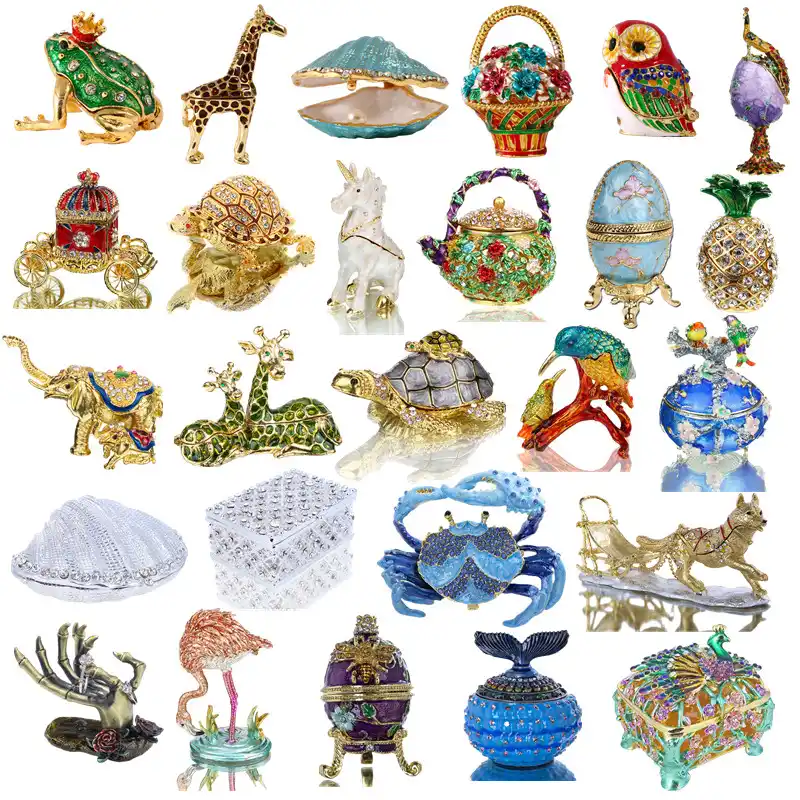
Her last name, Trinket, is a real word. Trinkets are jewelry of knickknacks, sometimes expensive and never useful. Decorative. Showy. Not a weapon you’d fear and not a tool you’d go to for help. Trinkets are there to sit still and look pretty. The site MyHeritage tells me it is, in fact, used as a surname in our world, but unless you have a friend by this name, you’ll probably think jewelry before people.
Effie Trinket - PEACOCK-LIKE PERFECTION A myriad of bright colors compete to take center stage in this outfit from the first installment. From her lime green wig to her bright makeup, which pops thanks to a hot pink pout, this is one of Effie's standout looks
Now, who is our woman? She’s a resident of the Capitol, which makes her wealthy. Her job as Reaping announcer and pre-Games escort puts her in the public eye, but she’s a pseudo-authority rather than an actual one. She selects contestants for the Hunger Games but can’t be held actively accountable for their deaths. Katniss doesn’t feel the same disdain for her as she does Capitol politicians and gamemakers. Unlike Cinna, Katniss’s stylist, and mentor Haymitch, she’s useless in terms of tactical game preparation, image control, and outside assistance. Her role is to accompany rather than coach. Her hair, makeup, outfits, and accessories aim for the height of fashion but hit a ghastly kind of flamboyance. And overall, she’s a walking euphemism. She’s the reader or viewer’s first introduction to the games, a fight to the death couched inside the glamour of reality television. She knows Katniss is slated to die, but perkily downplays every pre-game milestone as “a big, big day.”
Overall, Effie Trinket carries with it the airs of:
Wealth
Influence
Triviality
Glamour
Tackiness
Old-fashionedness
Sugarcoating

Try following this pattern to create a name for a similar character. Let’s start with the name Frances. We’ll bypass the common name Fran the same way Suzanne Collins doesn’t pull the ordinary Mia out of Euphemia. If we go to the end of Frances instead, we could turn it into Sissy, a weak woman who could be cute but certainly isn't useful in a fight. Now let’s brainstorm words similar to Trinket:
Treasure
Antique
Jewelry
Bauble
Decor
Knickknack
My favorite from this list is Bauble. If we change the spelling, that gives us bobble. Bobbleheads are bouncy, entertaining, decorative, and useless. Sissy Bobble sounds like a silly, useless sort of woman.

Writing prompt: Imagine a character who is Effie's opposite in every way-powerful, dangerous, modern, youthful, and sloppily dressed. Now, give her a name.