Wednesday, July 29, 2015

Stupidity with Sheila

I've had some dim lightbulb moments myself. All through my childhood, I heard people refer to lunchtime as "afternoon", but in first grade we ate lunch in midmorning. So until my upper elementary years I thought afternoon referred to eleven o' clock. In seventh grade I realized Ms. was a separate title than Miss, not an abbreviation, like Mr. for Mister. And I was seventeen before I figured out "Happy Holidays" is the all encompassing term for Christmas, Hanukkah, Kwanzaa, Winter Solstice, and other sundry celebrations, not just Christmas and New Years.
But luckily for me, I came to these realizations quietly, so nobody had to correct me. Or worse, try and fail to correct me.
I've been in that position a few times.
Here are the top three stupid conversations I've had with another human being. These all involved separate girls, but to avoid naming names, I'll call every last one of them Sheila.
Here goes.

1. The French-American Civil War
Sheila sat in front of me in an eighth grade class called U.S. History. Our textbooks said "American" on the front covers. There was a large map of America on one wall. Everybody in the class, including our teacher, was American.
At the beginning of our Civil War unit, he told us, "Take out a piece of paper and write down the two sides that fought in the Civil War and which one won. You can use the textbooks. You have five minutes."
Like the rest of the class, I ignored the textbook and spent all of five seconds on the assignment
1. North
2. South
3. North
For the next five minutes, I watched Sheila flip through the book. I figured she had finished and was looking through the coming chapter. The moment our time was up, she turned around to me.
"My French teacher told me France fought in the Civil War. But what was the other one?"
2. Goooooo Cancer!
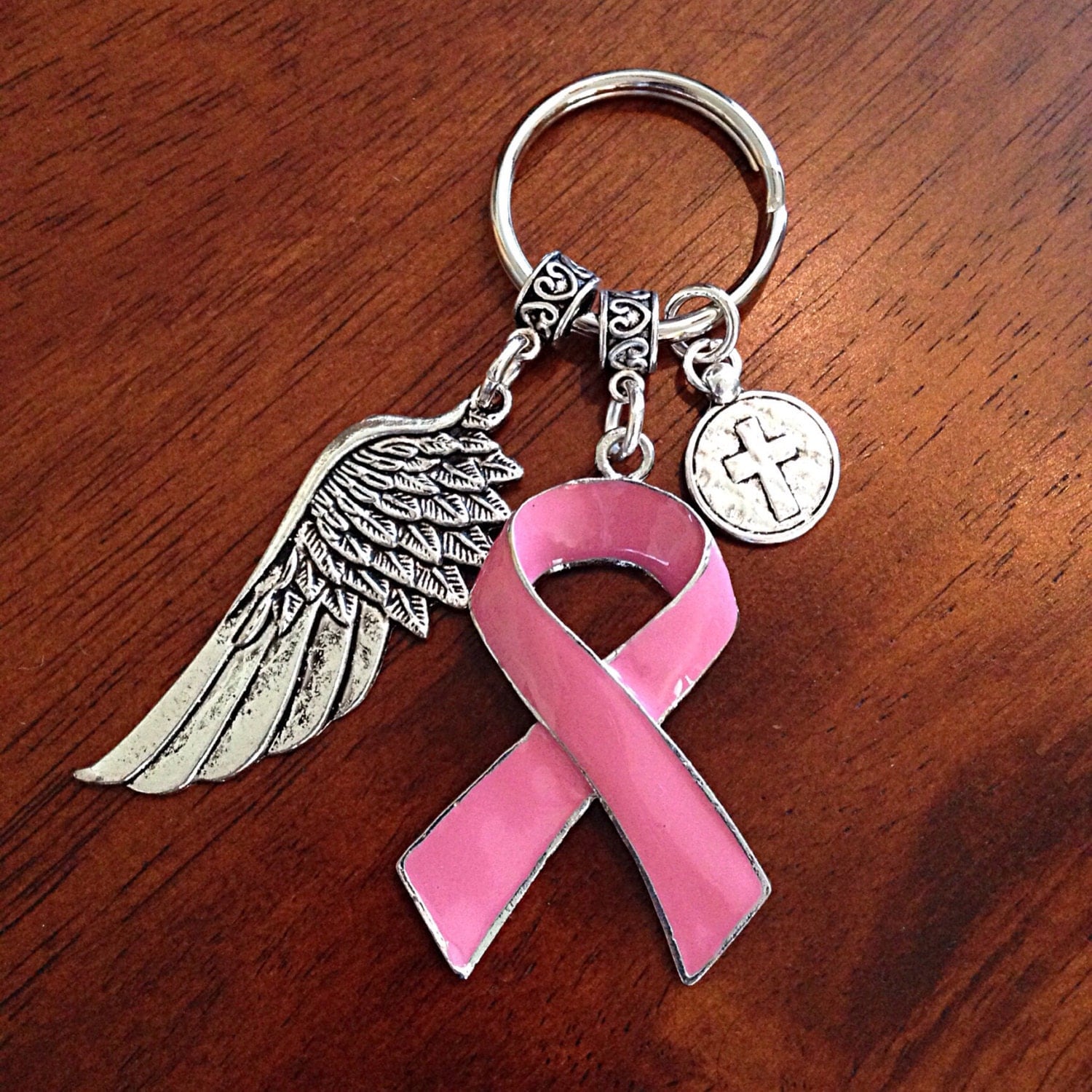
Sheila's purse had a Susan G. Komen pink ribbon key chain on the zipper pull, One day, she and the boy next to her were fighting over the purse when he accidentally snapped it off.
"Look what you did! How am I supposed to support breast cancer now?"
"Um, Sheila?" I said, "You don't support breast cancer."
She turned to me in shock. "Of course I do! I have a key chain!"
"You support breast cancer research or the Susan G. Komen foundation or the race for the cure. Not the cancer itself."
"Yeah! That's what 'support breast cancer' means."
"Uh....no. It's not. I don't support breast cancer."
She was horrified. "You don't?"
"Yeah. I also don't support car crashes, suicide, heart attacks-"
"Guys! She doesn't support breast cancer!"
Sheila and the boy asked me the same question as I walked into class for the rest of the week. My answer never changed.


3. White Family Insurance

One day Sheila walked into my dance class, sat down on the floor, and then turned to me with a question that had been weighing heavily on her mind. "Does Dunkin' Donuts sell donuts?"
I was fairly sure they did. "They're in the name, Sheila."
"Yes, but lots of companies are named after things they don't sell."
"Well..." I said the first company that came to mind. "Does American Family Insurance sell insurance to American families?"
Sheila had a good long think about this too. "I don't know. They sell it to black people."
"Sheila. Black people can be American. That's why we called African American."
At this point a girl sitting near us took pity and jumped into the conversation. "Yeah! There's also Hispanic Americans, Asian Americans, Native Americans, European Americans-"
"I know that!" Sheila snapped. "What I want to know is, does Dunkin' Donuts sell donuts?"

4. No Culture For You
Just this Sunday, one of my guy friends left to serve as a Spanish speaking missionary of the Church of Jesus Christ of Latter Day Saints in Texas. One of the girls (who is not the Sheila here) is heading out to the Philipines on her own mission soon. After the guy gave a farewell talk to his congregation, everyone who came to see him stood in the hallway to chat. We talked about the language and culture barriers they'd have to work with.
Hearing them talk about Spanish things and Filipino things reminded me of how Spain colonized the Philipines. I' said, "Doesn't the Philipines have a lot of Spanish influence."
"No." Sheila One looked me dead in the eyes. "They don't speak Spanish."
"Not the language. The culture. They were colonized by Spain."
"They don't have culture," Sheila Two said. "Just poor culture."
That's right, poor people. You're not allowed to have culture.
No songs.
No dances.
No recipes.
No fashion.
No folktales.
No holidays.
You have to be exactly the same as all other poor people everywhere.
Sheila said so.

And this, my friends, is why we send children to school. Although these Sheilas ranged in age from fourteen to eighteen. By that point, there's not a lot of fixing to be done. Some people are just stupid. Not uneducated, not misinformed, and not out of the loop. Stupid.
Stupid isn't what you don't know. It's refusing to believe that what you do know is wrong.

Tuesday, June 30, 2015

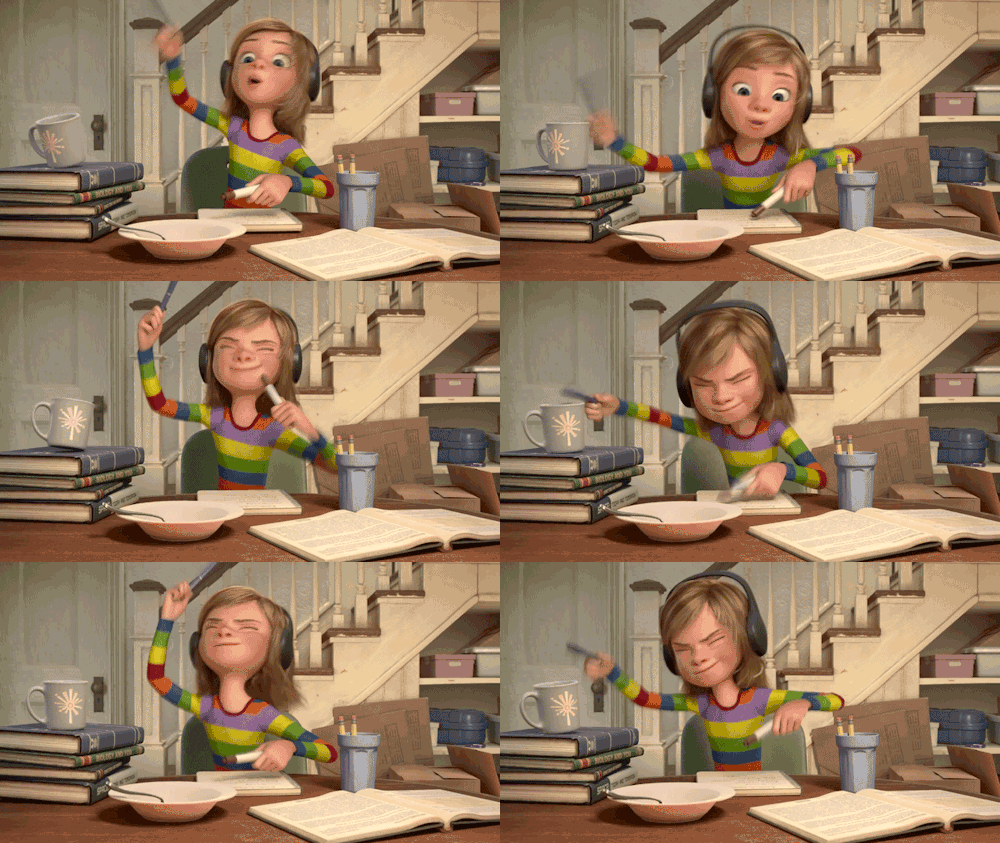
Reasons Riley Isn't Gay

I've seen it before and it's happening again now. With Pixar's Inside Out being released within a week of the Supreme Court's gay marriage ruling, conspiracy theorists and couch critics will emerge from the shadows to pass their verdict on protagonist Riley's sexuality. Watch. It happened with Elsa.
Elsa and Riley aren't the first Disney/Pixar characters to be scrutinized in this way. Flamboyant llama emperor Kuzco, who has a girlfriend in the spin off TV series, is often criticized the same way.


Ursula is said to be inspired by drag queen Divine and Timon and Pumbaa have raised a few eyebrows because for more or less adopting Simba. Never mind that Ursula's romantic preferences are NEVER a plot point and meerkats and warthogs can't mate.When Internet hearsayers start calling out Riley as gay, here's some of the evidence they'll use.

She lives in San Francisco. Gasp! Straight people can't live in San Francisco!
She owns a shirt with stripes in more than one colors. Gasp! Straight people can't wear rainbows!

Two of her five emotions (Fear and Anger) are male. When we get a glimpse inside her mom's head, they're all female. Inside her dad's mind, everyone has mustaches. Gasp! Straight people who haven't hit puberty yet can't have an emotional council with members of both genders. Also this interview segment displayed on Pixar's wikia page means absolutely nothing.

Regarding how the genders of the emotions were chosen, the process was intuitive, according to (Pete) Docter; he felt Anger was more masculine, while Sadness was more feminine. Casting was also an influence, notably for Disgust with Mindy Kaling. The main characters were made female also to reflect their location inside a girl's mind. Regarding the emotions of Riley's parents, he said: "We skewed them all male and all female for a quick read, because you have to understand where we are, which is a little phony but hopefully people don't mind!"

She plays hockey. Gasp! Straight girls can't play sports for fun and exercise!


 Haven't heard that one before.


Some things to keep in mind before then:
1. Riley is eleven years old her sexuality is in no way a pertinent part of this story.
2. She has an imaginary boyfriend factory inside her brain.
3. She shows a connection with a boy at the end of the movie.
4. If Pixar did want to create a gay feature character, you can bet they'd advertise it, and they haven't.
5. Riley is eleven years old her sexuality is in no way a pertinent part of this story.


Thursday, June 18, 2015

You Can't Blame the Yankees


Sometime ago I was listening to the radio on the way to school as people called in to share their experiences with "hatred by association." One woman hated the Yankees. The team had never done anything to harm her. But her ex-boyfriend was a fan, and whenever she saw the logo, she thought of him. So she lumped the Yankees in with the memory of him and hated the whole package.
Nearly everyone who called in had the same story. A friend, a family member, a lover-someone important to them had betrayed them or left their lives, and they hater everything their memory clung to. 
That was the first time I ever heard someone bring up secondhand hate in my hearing. But the more I think about it, the more I see it.
A toddle is attacked by a pit bull. He grows into a man who hates pit bulls, cocker spaniels, Dalmatians, chihuahuas, and anything else with four legs and a dog collar.
A girl is bullied by a girl named Sheila. Twenty years later, her husband wants to name their first born daughter after Great Aunt Sheila, and she won't hear of it.
A white kid, age nine, is bullied by a Hispanic kid. He hates that kid and projects that hatred onto an entire race. If he grows up racist, it's not because he was bullied as a child, but because he chose to hold onto that hate.
A woman falls in love with a man. They're engaged only for him to break it off three days before the wedding. She turns her back in love for the rest of her life.
Sometimes it's less secondhand hate than secondhand fear or pain. But if you find yourself clinging to something that never hurt you, it's unnecessary. Pain isn't the only option.
My friend Hannah had a near drowning incident in third grade. It left her with mental and physical limitations. She used a wheelchair for part of elementary school, but now she's fine walking and standing for short periods. We were chatting about the coming summer in class one day when she told me she was looking forward to swimming.
"You're not afraid of water?" I asked.
"No. My mom is, but I'm fine."
She's the one who nearly drowned. But she has no memories of the accident, so even though she lives with the consequences every time she stands or walks, she hasn't chosen to hold onto secondhand fear.
At age ten I was diagnosed with Tourette's Syndrome. I disagreed with the diagnosis and didn't accept it until years after the symptoms had vanished. So when I told people I had Tourette's, it brought on guilt. Once, after checking me out for a doctor's appointment, my mom took me shopping. I got five shirts. I wore those shirts for the next three years. Each time I did, I remembered where I got it and why. 
But I didn't stop wearing those shirts just because.
We went to a Christmas party with other Tourette's kids. I got a Polly Pocket from the gift exchange. She cost her buyer less than five dollars, but every time I looked at her, she was a present I didn't deserve. I barely played with her. But if I didn't have her on display with my other dolls, I felt I was hiding my shame. So I kept her out in the open. 
Now she's shut away in a box under a pile of papers in my bottom dresser drawer. I come across her maybe once a year when I reorganize my drawer. And each time I'm guilty again. But you know what? There's no reason this little lump of plastic should be a guilt vessel. I didn't steal it. The guilt isn't about the doll, it's about the memories I've shut inside it. Secondhand guilt isn't worth holding onto either.
Displaying IMG_1933.JPG

You can't blame the Yankees for a breakup. If you breakup with the Yankees along with the boy, you're not protecting yourself. You're losing both your boyfriend and your favorite team. What else goes out with the bathwater? Your special song? The whole album? The singer? An entire music genre?  I read a post from a woman whose last three breakups occurred while Taylor Swift songs were playing. Now she gets nervous whenever her music comes on while she's in the car with her boyfriend. 
There is a place for hate.You can't let hate drive you, consume you. The same goes for fear, worry, anger, and guilt. Most negative emotions that take their toll on you are secondhand.
So why let them consume you?

Thursday, May 28, 2015

The Kidney Hypothetical: Or How to Ruin Your Life in Seven Days by Lisa Yee


Genre: Contemporary
Rating: *****
Pages: 266
Should I Be Concerned? Frequent and harsh swearing but no sex.

Prom king. Debate captain. Harvard early admission. Higgs Boson Bing is a high school success-until his girlfriend asks, hypothetically, if he'd donate a kidney to save her life. When he says no, she takes it as a personal betrayal. The next day, the entire school's turned against him. He can't take a step down the hall without passing a "Higgs Bing is a Dinky Dick" poster. His best friend's stopped speaking to him. And that Society for Animal Protection he listed on his application? Yeah, someone tipped off Harvard that it had two members and never actually saved an animal.
The entire faculty, from the janitor to the principal, is more than happy to watch his life of privilege crumble around him. At home, his mom's too busy grieving for his perfect older brother to help. Meahwhile, his dad's obsession with having a second Harvard bound son blocks him from seeing Higgs' real needs.
He needs an ally-and he finds her in a beaten up trailer by the river.
Monarch couldn't be farther from the Ivy League crowd Higgs once called friends. She has dark eyeshadow, a butterfly tattoo, and a reckless sense of adventure. Whether they're launching a pet store raid to make Higgs a true animal defender or just handing out in her trailer doesn't matter. She makes him feel more alive than his two-kidneyed girlfriend ever did.
Hanging out with Monarch may get him arrested, but with seven days to graduation, it's time he started living.
This book was perfect for me. I don't know if it will hit the spot for anyone else, but it did for me. Usually when I read a book, it's an errand months in the making. I mark the release date on my calendar, take my sweet time finding a copy, and then put it in my monstrous To Be Read.
Kidney Hypothetical wasn't like that. I picked it up on a whim, read the jacket flap, and ended up taking it home. The fact that I went to the library seven days before graduation might've had something to do with it. In the world of fiction, breakups and betrayals are fueled by some dramatic incident. In real life, they fall apart because of petty pride and escalating arguments. I've never seen a work of fiction ground that particular piece of reality into a story. At least, not a non-comedy.
It's grittier than what I usually read, and Higgs' trainwrecked life hits some pretty low points, but his wacky escapades and the sheer absurdity of his situation provides comic relief. Kidney Hypothetical is more applicable to my life than any book I've read in the last year. I would've stayed up all night to finish it, but I wanted to drag it out and savor the taste.


Monday, May 18, 2015

Cry Me A River


This is my river. The Jordan. No, not the biblical Jordan. Just one of its four American namesakes. It's a third of the length of the original and doesn't carry a tenth of the prestige when all the rivers get together to care themselves. But it's similar enough to merit the name Jordan. They both flow from a freshwater body to a Dead Sea, never mind that theirs is both deeper and saltier. We merit the other half of the name, too. River. Yes, the stretch of it I can see from my kitchen window is only ten feet across in parts. Yes, there are bigger ditches and flooded roads across the world. But it's a river, and it's mine, so don't let me here you talking bad about it.
Awhile back I took my dog for a walk along my river. As he stopped to measure the algae levels with his tongue, I sat on the bank and thought about my life. My problems and the ones I see my friends going through. My problems and the wars and rumors of wars around the world. There are places in the world where kids have to cross rickety rope bridges to get an education on the other side of their rivers. There are rivers that run dry. There are rivers that flood. My river and my problems seem small by comparison.
So is my dribbly ditch still worthy of riverhood? I'll say yes. Everyone needs rivers, and in desert Utah we can't afford to be picky. 
I threw a rock across the water. It was so shallow, I watched it sink to the scummy bottom, and I got to thinking about the greatest river I've ever been on, the Colorado.

The Colorado is one of the largest rivers in the US. It flows through seven states, five American and two Mexican. It's the Colorado that chiseled away patiently for thousands of years to carve the Grand Canyon. For the last few millennia there have been humans living alongside it. 40 million humans depend on it today. In addition to people, it feeds everything from sheep ranches to hydroelectric dams. So even if you only see rivers for what they give YOU, you're still dependent on it for fleece and power. 

Give said the little stream
Give oh give
Give oh give
Give said the little stream
As it hurried down the hill 
I'm small I know
But wherever I go
The grass grows greener still
Singing, singing all the day
Give away, oh give away
Singing, singing all the day
Give oh give away

Those are the words of a song I learned in church as a girl. It's my song as much as it's my river. We're taught to be selfless, like that little stream, and like the mighty Colorado. But what toll does all this giving take on the poor river?
One thousand four hundred and fifty miles of water. It stretches from the Colorado Rockies to world's largest ocean. Sometimes. After all that damming and drinking and sheeping, the Colorado River runs dry. By the time it reaches the Pacific it can barely lick at the sand. In the last fifty years it's only reached the sea a handful of times. Each year when I visit Lake Powell, one of the many pockets of water sucking moisture from the Colorado, I see this great white bathtub ring around the edges, a reminder of what it's lost.
Maybe the Colorado's happy to give. All those drinkers and dammers and ranchers, what would they do without it? And the Pacific certainly doesn't miss it. There are plenty of other rivers to feed it. But maybe, just maybe, the Colorado would like to kiss the sea again. 

Last week I was driving home in the rain when I saw a guy I knew walking the road alone. It was a vertical river, and a light one at that, but I don't like watching people drown. So I drove a few more seconds and pulled over, too far ahead to put a puddle in his path. 
"No one walks alone in the rain," I told him, and he got in my car. 
Turns out, his course wasn't a long one. I pulled into his driveway and watched him shoot off his mouth as the sun dried the concrete around us. 
He talked about people, and his problems, and his problems with people. How depressed people need to suck it up and realize everyone has problems. How cutters need to put down their dripping blades and start acting healthy. How they shouldn't cry out for help as they drowned because if they had air to scream they weren't drowning in the first place. 
He had so many problems, but what he didn't seem to realize was that he'd become one of mine. I let him out and went home to my river.
There are two great lessons we can learn from rivers. One is that we all have problems. There are Poor Starving Children in Africa who don't have rivers. And on the other side of Africa a village just got flooded.
The second is that we can't keep give-oh-giving all the live long day. There comes a time when you don't want to be the constant faucet to a constant drain.
We all have rivers. Maybe yours is deep, and his is long. Maybe his is long, and hers is rapid. Maybe hers is rapid, and mine is salty. Every river has its problems, is its problems-but don't you dare thing you're the only one out there with a river.

Wednesday, April 22, 2015

She Will Be Victorious


They say that behind every powerful man is an even stronger woman. Well, behind every strong woman is a man who tried to beat her down. For Queen Victoria that man was John Conroy.You know Vicky. You've never heard of John. Well, have you? That's because Victoria was a resilient girl who never let Conroy become her puppet master.

Victoria's father died when she was young and her mother soon went broke. It takes cash to raise the queen of England and she turned to her husband's old friend. That's our Johnny boy. There's no record of their conversation, but I believe it went something like this.Mama: I'm broke and my daughter is supposed to become the most powerful woman in Britain. A little help here?Conroy: Oh, you want me to move in with you and control your finances and break your daughter emotionally so she's too weak to rule and I get to control the money foreeeeever?Mama: Wait, what?Conroy: Yeah, I'll help.Mama: Yippee!


For the duration of Victoria's childhood, Conroy called the shots. He fired staff who were too kind to her. Whenever she disobeyed, she had to stand on a dark landing all alone with her hands tied behind her back. Years passed. She grew from a scared child to a teenager who dared rebel in tiny ways, like glaring at him when he came into the room and writing gushing diary entries about people Conroy hated. Of course he read her diary, what responsible guardian wouldn't? He also never told her she was going to be queen of  England. Her governess, who he never could manage to fire, slipped a royal family tree into a book of hers one day and she figured it out. He did his best to keep her from becoming a queen the world would want to have.
Victoria's old, fat uncle-king got older and fatter but he stubbornly refused to die before Victoria came of age. That put Conroy's panties in a twist, so when Victoria came down with typhoid fever, he struck.Here she is, barely lucid, hair falling out, the governess Conroy hasn't managed to fire yet hovering at her bedside, when Conroy barges in flapping a paper. Just sign it, and I'll be your financial secretary forever and ever. She later wrote of this time, "I was extremely crushed and kept under and hardly dared saw a word." Yet somehow, Victoria found the strength in her to resist, even when her mother (who historians speculate might have been Conroy's lover) got in on the bullying.
The night Victoria gets the news, she walks up to Conroy and tells him, "I'm the Queen of England. Sucks to suck. Get out of my palace and die alone."
Something like that, anyway.
You know the rest of the story. She brings about the Victorian era and has landmarks on every continent named after her. The sun never sets on her empire. One of the strongest rulers in history, but what stands out to me is her weakness.
She knew she was destined to be the queen of England. Well, eventually. She knew didn't have to bow down to Conroy. But he took away any power she might have had as a child and cut her off from the people and things that would have lent her strength.
We all have a John Conroy in our lives. Someone who decides to play puppet master and succeeds only because we stand limp and let him jiggle our limbs. Someone who thinks any slight expression of free will is an intolerable act of rebellion. Someone who can't be pleased, or reasoned with, or satisfied by anything other than a bowed head and a hushed tongue. Someone who wants you to be their constant faucet to their constant drain. 
Unless you plan on becoming Queen of England sometime soon, there's only one way to deal with a Conroy: Stand up for yourself. Stand up for yourself and be victorious. 


Monday, April 13, 2015

Level Up

This was the fourth and probably last year I attended Teen Author Boot Camp, a young author's conference put on by local author group Writers Cubed. The first time I went, I was fifteen and still struggling to write two notebook pages a day. Now I'm eighteen, interning with a publishing company and I have seven completed novels under my belt. Seven. My goal was six by graduation. I go to enough author events that I was recognized by three different authors that day without having to introduce myself.
The keynote speaker was fantasy novelist Brandon Sanderson. He talked about his own writing, and surprisingly, a favorite video game of his, Spelunky.

As  I understand from Brandon's explanation, Spelunky doesn't do lives. Once you die you die. Back to level one. There are no power ups either. So even though its dungeon crawl design is similar to many video games, it's ridiculously hard.
He hated it, but of course he had to beat it, so he kept playing. And eventually he made it to the top. He came to realize that even if he couldn't upgrade his character, he could upgrade himself.
Writing is the same. Brandon Sanderson has hit the NYT Bestseller list six times. He writes eighteen hundred page books and people buy them. He travels around the country appearing at conventions because everyone wants a piece of him. But he didn't let the fame go to his head, and he didn't have this "lonely at the top" mentality either. Instead, he said one of the most reassuring things I've ever heard. He wrote something like eleven novels before he got published. Once he hit it, he hit it big. But he said that if he were to die at the computer, if his family found him with his face in the keyboard, nose on the T key, spewing one letter across fifty pages, and that was his hundredth unpublished novel, he'd still be okay-because those novels helped him upgrade himself.
I was a runner-up in TABC's first chapter contest, and part of my prize was free author edits on my writing. So I went home, flipped open my laptop, and started typing up the edits.
And then the screen went black.
It turned out to be nothing more than a harddrive error, so after a few hours of frantic button pushing, virus scanning, and file salvaging, I was good to go. But for half the day I was worried I'd lose two complete novels that hadn't been backed up in their latest form. I've come close to this kind of crisis before, and this wasn't the worst time, but I spent several hours on the brink.
However, I never fell into despair. I remembered what Brandon Sanderson said about upgrading yourself. So even if I don't get to read back over my pride and joys, I still have the fruits.
I think this is good advice, not just for writing, but for life. You can never measure your self worth by possessions acquired, connections made, or awards won. It's all about the upgrade.